One knowledge base for your team and its AI agents
Everything your team writes and says, indexed into one base and answered under the permissions you already have: in the app, and over MCP to Claude Code, Cursor or any other client.
What it knows
Issues, code reviews, documents, chat, call transcripts and your git repositories. Nothing to write or maintain by hand: the base fills itself as the team works.
Ask in the app
Press Mod+J on any screen and ask in plain words. The assistant searches every source at once, knows the issue or run you have open, and answers with links, so you open the source instead of trusting a summary.
Document search uses the same base: switch it from names to contents, and results found through a linked issue, review, chat or call say so.
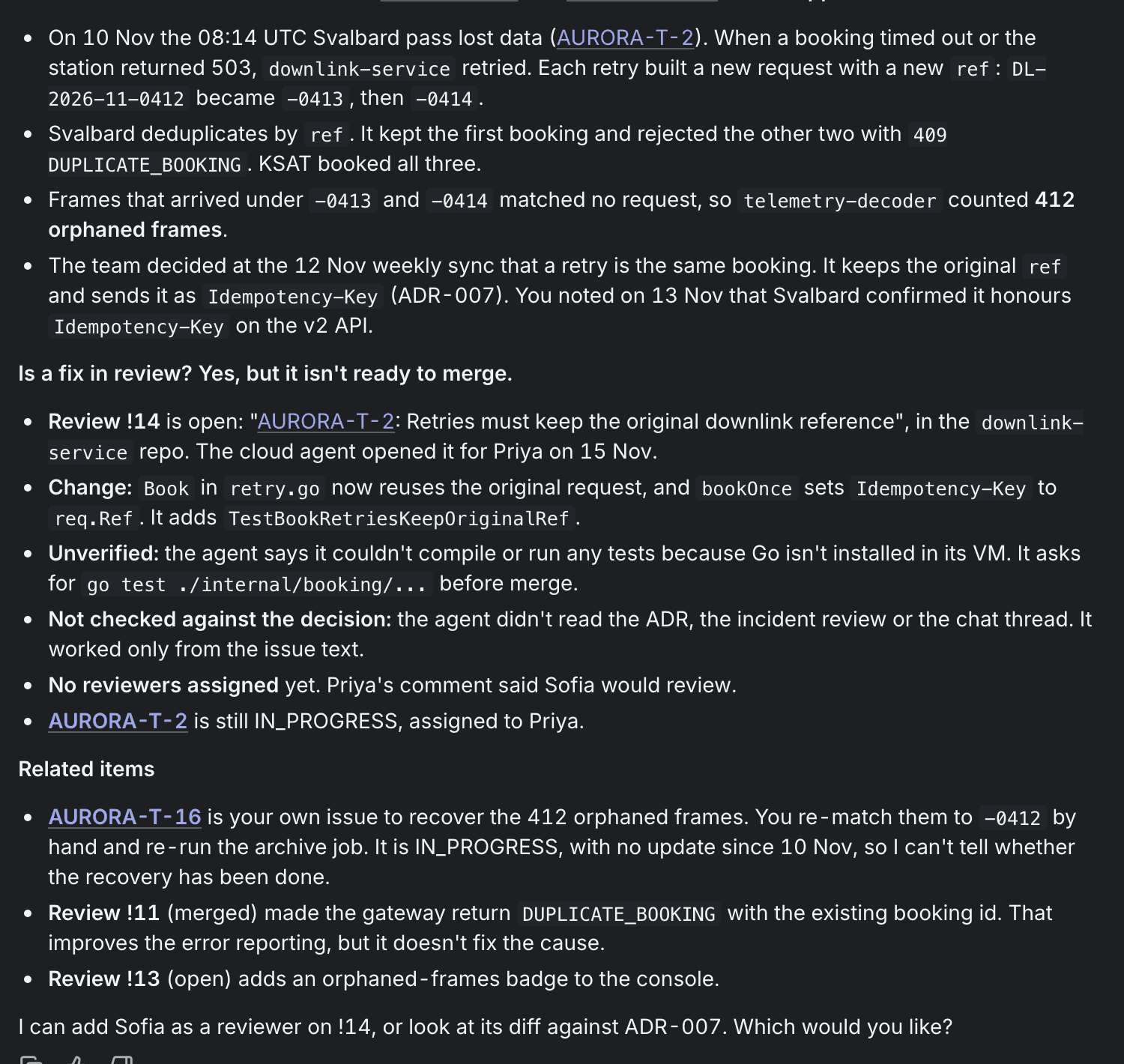
Your code is part of the knowledge base
Source code is part of the knowledge base. Ask the assistant in the app, or your coding agent over MCP, and it searches the code of your repositories together with issues, reviews and documents: where something is defined, what a file does, why a line changed. Answers quote the code and link to the file and the commit, and only from repositories you can open.
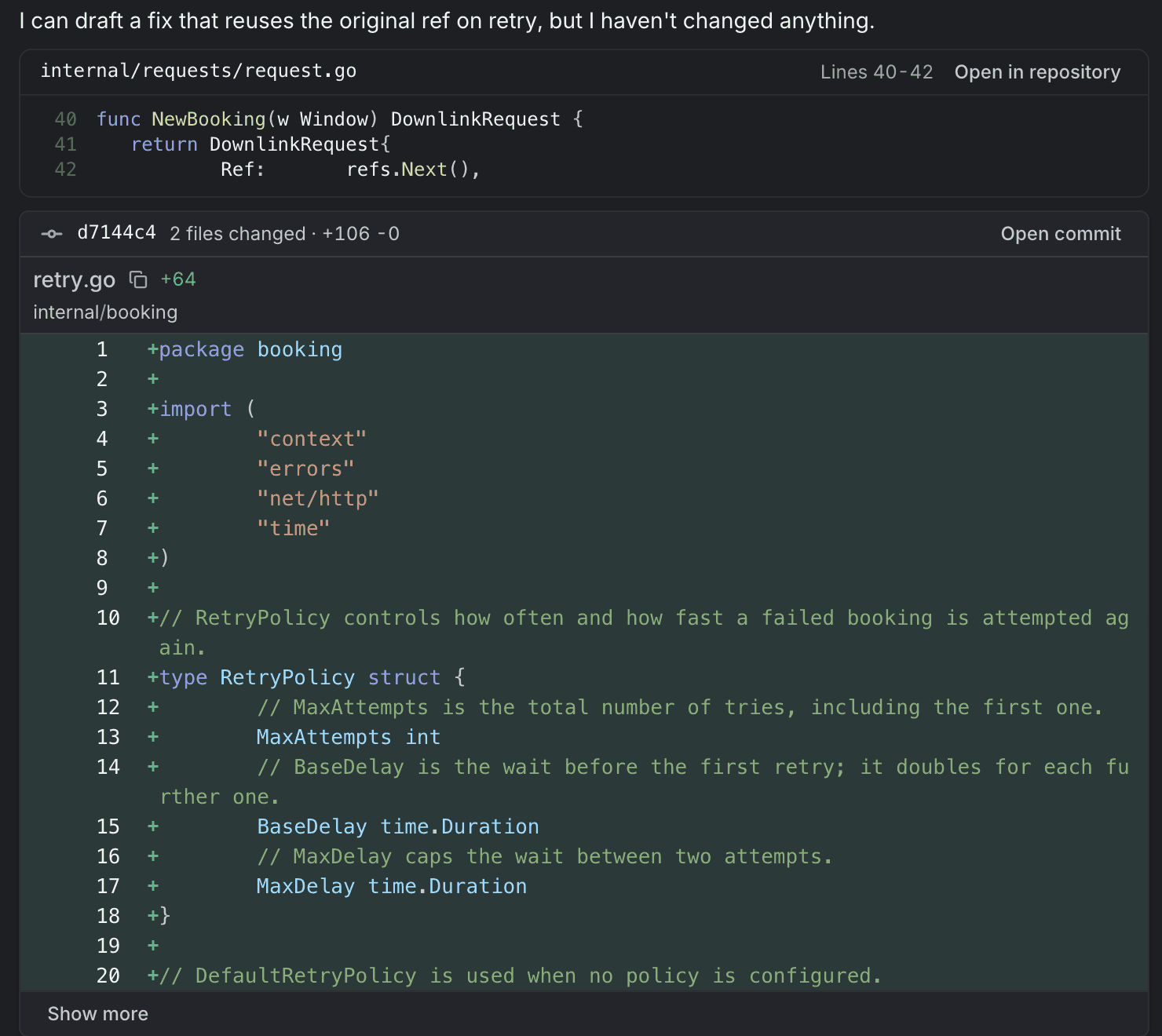
Ask from your coding agents
Connect Claude Code, Cursor, Codex or any other MCP client once, with a sign in and no keys to copy. One tool searches issues, reviews, documents, chats, calls and commit messages together; others read a file, find a symbol, search the code of a repository or explain the history of a line.
The same connection works with issues, reviews, pipelines and deployments, so an agent that found the answer can act on it.
How a question is answered
The same five steps run for every question, in the app and over MCP.
What goes in
Six sources fill the base on their own, as the team works:
- Chats and their threads.
- Issues and their discussions.
- Code reviews and their discussions.
- Documents and their discussions.
- Call transcripts, from calls with AI analysis turned on.
- The messages of commits on every branch you push, with lines that look like secrets left out.
Nobody writes or tidies it by hand. When an issue is closed or a document is rewritten, the base follows.
Only what you could open yourself
Every answer is built for the person asking. Private documents, restricted folders and chats you are not in never show up, call transcripts are open only to the people who were on the call, and an agent sees exactly what the person who started it sees.
Questions about the knowledge base
- How is it different from a wiki?
- Nobody writes it. It fills up from work that happens anyway: issues, reviews, documents, chat and calls. When the work changes, the base changes with it.
- Who can see what?
- The same people who can open the source. An answer is built only from fragments the person asking is allowed to read, and an agent gets the permissions of the person who started it.
- What goes to a model provider?
- The text of the indexed sources goes to an OpenAI embedding model to build the index. Answers are generated with Anthropic models, or with your own key. Source code is searched in place and is not sent to the embedding provider. Call transcripts are indexed only from calls with AI analysis turned on.
- Can our agents use it outside the app?
- Yes. Connect the MCP server once, and Claude Code, Cursor or any MCP client gets the same search and the same tools for issues, reviews, branches and deploys, signed in as you.